First Time China Mistakes: Common Mistakes First-Time Visitors Make in China
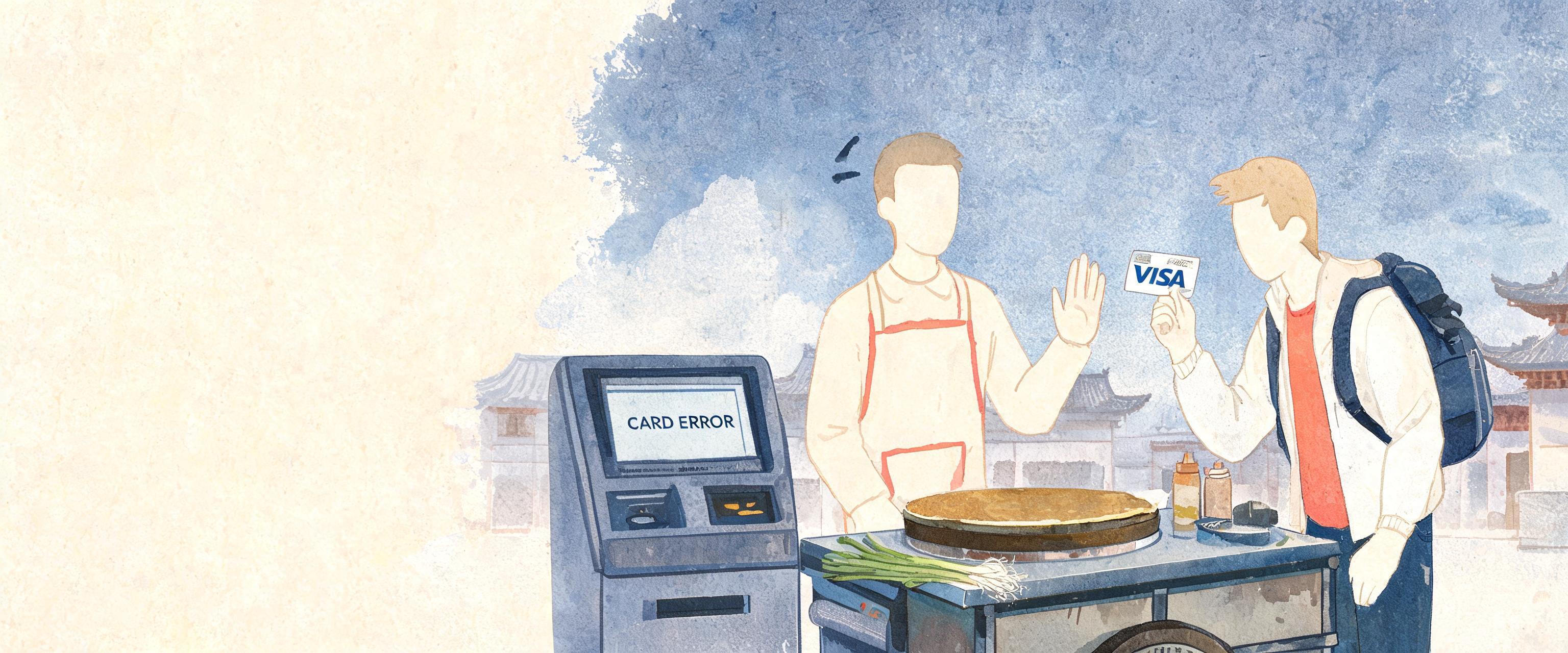
You land in Beijing, grab a street jianbing for breakfast, pull out your Visa card, and get a head shake. Then you try to pull cash from an ATM, only to get a "card not supported" error. You fire up Google Maps to find your hotel, but your pre-trip VPN drops connection every 30 seconds. This is the exact first-day chaos hundreds of first-time visitors to China face, all because of avoidable first time china mistakes. Even with meticulous guidebook planning, small oversights can derail the first 48 hours of your trip. With targeted prep, you can skip these headaches entirely.
The Most Costly and Disruptive First Time China Mistakes
Avoiding these top pitfalls will save you time, money, and stress on your first trip.
Relying Solely on Foreign Bank Cards or Cash for Daily Payments
90%+ of small shops, street food stalls, and even some mid-range restaurants don’t accept Visa, Mastercard, or other foreign bank cards, and many ATMs don’t work with foreign cards either. Even carrying large amounts of cash isn’t a perfect fix, as some vendors won’t have change for big bills, and metro or bus systems rarely accept cash for single rides. Real traveler reports confirm this is the single most common first time china mistake, with many visitors spending their first hour scrambling to find a working ATM or a shop that takes foreign cards.
Trusting Pre-Trip VPNs to Work Reliably
Many free or paid VPNs set up before your trip will drop connection constantly or stop working entirely upon arrival, cutting off access to Google Maps, Gmail, WhatsApp, and other blocked apps. Foreign travelers repeatedly note that even premium VPNs struggle with inconsistent speeds or sudden outages, leaving them stranded without navigation or communication tools.
Booking Train Tickets Through Markup-Heavy Foreign Third-Party Platforms
Some foreign third-party platforms charge 20–50% markup fees for Chinese train tickets, and they often offer no way to change or cancel tickets without in-person help at a station. Travelers who tried these services report spending hours at train stations trying to fix booking errors, only to be told they need to purchase new tickets entirely.
Underestimating Airport Transfer Times in Major Cities
Generic guidebook "estimated travel times" often don’t account for unexpected traffic jams, especially in Beijing and Shanghai. Real-world traveler feedback shows that trips from city centers to airports can take double the predicted time during rush hour, leading to missed flights or stressful last-minute dashes.
Forgetting Physical Passport Copies (and Offline Photos)
Some smaller hotels won’t accept digital-only passport copies, and police spot checks occasionally require physical ID backup. Travelers consistently recommend keeping a physical copy separate from your original passport, plus an offline photo stored on your phone, to avoid being turned away from accommodation or delayed during checks.
Common Myths About First-Time Travel to China
These widespread misconceptions lead directly to first time china mistakes. Here’s the real story.
Myth 1: You Can Get By Fine With Just Google Translate for All Translation Needs
Google Translate often fails to scan vertical Chinese restaurant menus, fails to recognize regional dialect audio, and its offline mode has extremely limited vocabulary for daily tasks like asking about laundry or bus routes. The consensus from firsthand accounts is that most travelers switch to Baidu Translate or DeepL (with a working VPN) instead, as these tools handle vertical text, regional speech, and daily vocabulary far better.
Myth 2: English Is Widely Spoken in Major Chinese Cities Like Beijing and Shanghai
Outside of luxury hotels, tourist information desks, and some chain restaurants, very few locals (including taxi drivers) speak conversational English. Even simple phrases like "please turn left" are often misunderstood. This is one of the most surprising first time china mistakes for visitors who assume major cities have universal English proficiency.
Myth 3: You Should Book All Internal Flights and Train Tickets Weeks in Advance for the Best Prices
Train tickets for high-speed rail only open for sale 15 days before departure, and booking too early for domestic Chinese flights can lead to higher prices; airlines often drop prices 7–10 days pre-departure for empty seats. Travelers who booked months in advance report paying 30–40% more than those who waited for the official sales window.
Real-World Hacks to Avoid First Time China Mistakes
These traveler-tested fixes solve the most common pain points before they start.
Set Up a Temporary Alipay Tour Pass With Hotel Front Desk Help
Ask a local hotel front desk staff to help you set up a temporary Alipay "tour pass" linked to your foreign credit card. It works for 90 days, no Chinese bank account needed, for payments, taxi fares, and even subway top-ups. This eliminates the no-foreign-cards payment problem entirely for all daily transactions.
Download Offline Amap (Gaode Maps) Before Arrival
Download offline maps for Amap (Gaode Maps) before you land. It has accurate public transit routing, street names in both Chinese and English, and works without a VPN. This replaces Google Maps for navigation when your VPN fails, and it’s far more reliable for local transit directions.
Buy a Local SIM Card at the Airport (Not Online)
Buy a local Chinese SIM card at the airport, not online beforehand. Airport kiosks have English-speaking staff, set up data/VPN-compatible APN settings for you, and avoid the hassle of verifying identity at local phone shops. This ensures reliable internet access from day one without relying on spotty hotel Wi-Fi.
Screenshot Your Hotel’s Chinese Address and Entrance Photo
Take a screenshot of your hotel’s name and address in Chinese characters and a photo of its front entrance before leaving for the day. Taxi drivers will almost never recognize English addresses, and the entrance photo helps if you get lost near the hotel.
Bottom Line
The top three steps to avoid first time china mistakes are: set up an Alipay Tour Pass on day one, download offline Amap before arrival, and buy a local SIM card at the airport. These three fixes alone will eliminate 80% of the most common first-day headaches, letting you focus on exploring instead of troubleshooting.
Related Articles
- Classic Beijing, Xi'an, Shanghai First-Time Itinerary
- How Foreigners Actually Pay in China (2026)
- Beijing to Shanghai: High-Speed Train vs Flight
- Classic Beijing-Xi'an-Shanghai Two Week Itinerary
- Shanghai Shopping and Bar Restaurant Guide
Key Takeaways
- Foreign bank cards (Visa/Mastercard) are useless for 90%+ of daily transactions; use an Alipay Tour Pass instead.
- Pre-trip VPNs often fail; download offline Amap and a local SIM card to stay connected and navigate.
- Don’t book train tickets more than 15 days early or domestic flights more than 10 days early to avoid overpaying.
- Keep a physical passport copy and offline photo of your passport for hotel check-ins and spot checks.
- Screenshot your hotel’s Chinese address and entrance photo to avoid taxi confusion.
Tags
About the Author
The author has lived and traveled extensively in China for 5+ years, specializing in practical advice for first-time foreign visitors navigating the Chinese payment and transportation ecosystems. Insights are synthesized from hundreds of firsthand traveler reports.