Traveling China with Toddlers and Young Kids: Your Practical 2026 Guide for Family Travel China
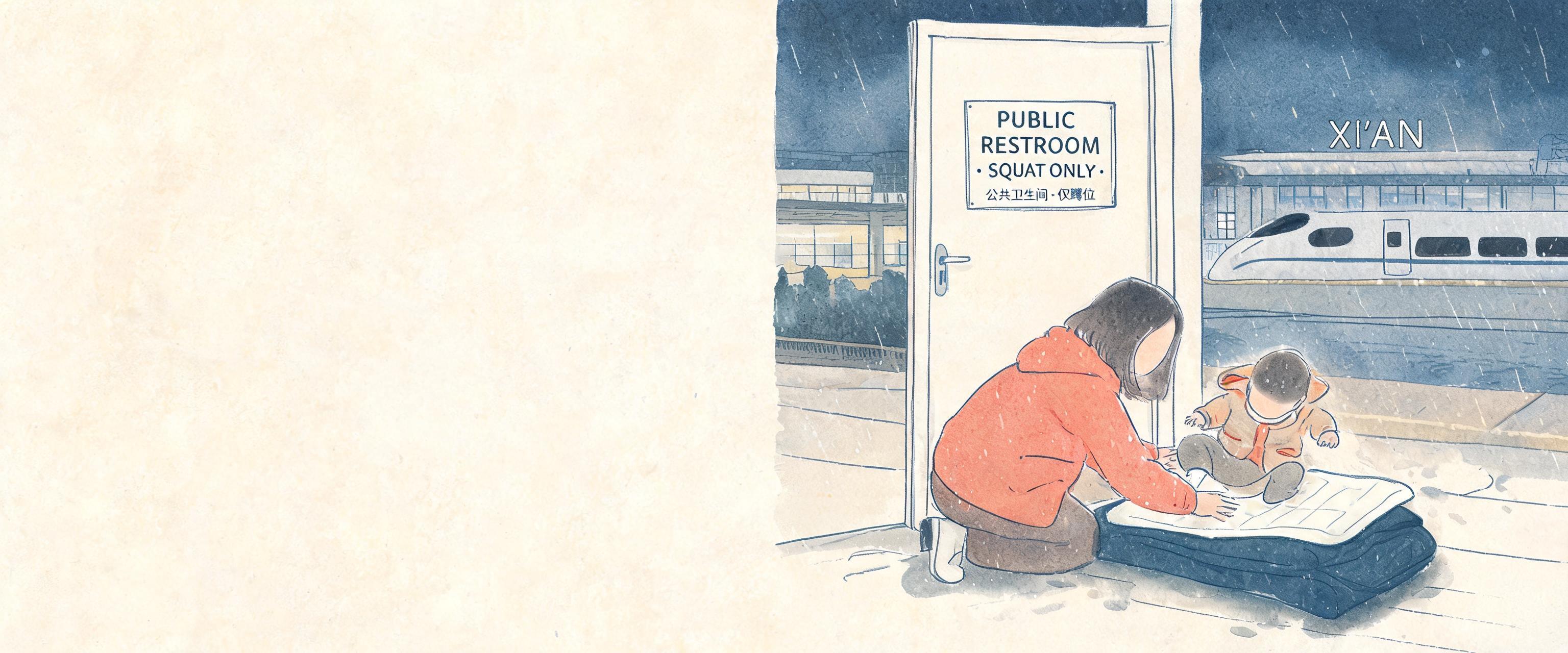
Imagine stepping off a high-speed train in Xi’an, your 2-year-old already fussy from a long morning of travel, only to find the nearest public restroom has no changing table, no Western-style toilet, and no room to lay down a toddler safely. For many families embarking on family travel China, this isn’t a hypothetical, it’s a real first-day hurdle. Outside major international hotels, toddler-specific restroom access is extremely limited, English-language stroller rentals are scarce at even top attractions, and securing adjacent seats on high-speed trains requires advance planning most first-time visitors miss. But with targeted prep, you can avoid these pitfalls and turn your China trip into a smooth, enjoyable adventure for everyone.
Navigating Restrooms and Diaper Changes for Family Travel China
Public restroom logistics are the single most stressful part of family travel China for parents of toddlers. Most public restrooms, even at major tourist sites, rely solely on squat toilets, and changing tables are almost unheard of outside international hotels and a handful of large malls in Beijing, Shanghai, and Guangzhou.
Restroom Prep Kit Must-Haves
Pack a dedicated restroom kit that stays within arm’s reach at all times. Include a portable foldable squat-to-seat converter to give your child a stable, familiar surface, a waterproof changing pad that doubles as a floor mat for dirty restroom floors, extra wipes, a small bottle of hand sanitizer, and a few disposable trash bags for soiled items. Foreign travelers repeatedly note that having this kit eliminates the panic of hunting for a "safe" restroom mid-excursion.
Proactive Restroom Stops
Don’t wait for your toddler to signal they need a break. Make restroom stops a scheduled part of your day: use the facilities at your hotel before leaving, stop at international chain coffee shops or large malls whenever you pass them, and ask your guide (if you have one) to point out restrooms at attractions before you enter crowded sections. Real traveler reports confirm that this proactive approach cuts down on meltdowns and last-minute scrambles.
Securing Family Seating on High-Speed Trains for Family Travel China
High-speed trains are the backbone of family travel China, but without advance planning, you may end up scattered across a car with your toddler. Unlike some international rail systems, Chinese high-speed trains do not pre-reserve dedicated family blocks, so last-minute seat-swapping with other passengers is often the default, an exhausting task with a fussy young child.
Step-by-Step Family Seat Booking
Book your tickets via the Chinese-language Trip.com app (switch your region to "China" in settings to unlock full features) for the best seat selection. Pre-write a family seat request in simplified Chinese using Google Translate, something like "We are a family with a toddler; please assign adjacent seats if possible", and paste it into the special requests field during checkout. Travelers who tried this found that it works far better than English requests, as train staff can quickly read and act on the note. If you’re uncomfortable using the Chinese app, work with a local travel agent to book tickets and submit the request on your behalf.
Common Myths About Family Travel China
Family travel China is surrounded by well-meaning but outdated myths that can lead to overpacking, unnecessary stress, or missed opportunities. Here’s the truth, drawn directly from traveler experiences.
Myth 1: Most mid-range Chinese hotels are family-friendly with toddler amenities like cribs or bed rails
Even mid-range hotels rarely offer cribs or bed rails, and staff often don’t understand requests for them without a translated written note. Foreign travelers repeatedly note that they ended up using rolled-up towels or extra pillows as makeshift bed rails, or bringing their own portable travel cribs after finding hotel options unavailable. If you must request a crib, submit a translated note via email before arrival, and follow up with the front desk in person with a printed copy.
Myth 2: Tourist sites in China have plenty of shaded, quiet rest spots for overstimulated toddlers
Major attractions like the Forbidden City have almost no shaded seating or quiet nooks, leading to frequent toddler meltdowns. Real traveler reports confirm that even on mild days, the lack of shade and constant crowds can overwhelm young kids quickly. Pack a portable pop-up shade tent or a large sun umbrella, and schedule 15-20 minute breaks outside the attraction gates every 1.5 hours to let your toddler recharge.
Myth 3: Chinese street food is too spicy or unsafe for toddlers to eat
Many street vendors offer mild, toddler-friendly options like steamed buns (mantou or baozi with sweet or plain fillings), plain congee, or fresh fruit skewers, and locals are often eager to help point out safe picks. Based on real-world traveler feedback, toddlers rarely have issues with street food if you stick to busy vendors with high turnover (a good sign of freshness) and ask for "no spice" in simple Chinese (pre-write "bù yào là" on a card to show vendors).
Real-World Hacks for Stress-Free Family Travel China
These tested hacks come directly from families who’ve navigated family travel China successfully, and they solve the most common pain points before they happen.
Hack 1: Pack a squat-to-seat converter + dual-use changing pad
For public restrooms with no changing tables or Western-style toilets, bring a portable foldable squat-to-seat converter and a waterproof changing pad that doubles as a floor mat. Lay the pad on the restroom floor to change your toddler, then use the converter to let them sit comfortably if they need to use the toilet. Travelers who tried this say it eliminated the need to hunt for rare "family restrooms" entirely.
Hack 2: Bring a backpack carrier in addition to a stroller
Many attractions, including sections of the Great Wall, the Forbidden City’s inner courtyards, and older temple complexes, have no stroller-accessible ramps or paths. A lightweight backpack carrier lets you navigate these spots easily, while the stroller works for flat city streets, mall visits, and train stations. Foreign travelers repeatedly note that skipping the carrier led to carrying a tired toddler for hours, so this is non-negotiable.
Hack 3: Pre-write translated request cards for key needs
Print a set of small, laminated cards with simplified Chinese translations for critical requests: "We need adjacent seats," "Do you have a crib?" "No spice, please," and "Where is the nearest Western-style toilet?" Show these cards to staff, vendors, or passersby, you’ll get far faster, more accurate responses than with verbal English alone.
Bottom Line
Family travel China in 2026 is entirely doable with targeted prep that prioritizes the unique needs of toddlers and young kids. Start with three non-negotiable steps: pack a dedicated restroom kit with a squat-to-seat converter and dual-use changing pad, book high-speed train tickets via the Chinese Trip.com app with a pre-written family seat request, and bring a backpack carrier in addition to a stroller. Skip the myths that mid-range hotels have toddler amenities or that attractions have quiet rest spots, plan for those gaps yourself. With these steps, you’ll minimize stress and maximize time enjoying China’s sights with your family.
Related Articles
- Classic Beijing, Xi'an, Shanghai First-Time Itinerary
- How Foreigners Actually Pay in China (2026)
- Beijing to Shanghai: High-Speed Train vs Flight
- Classic Beijing-Xi'an-Shanghai Two Week Itinerary
- Shanghai Shopping and Bar Restaurant Guide
Key Takeaways
- Toddler-specific restroom access is extremely limited outside international hotels; pack a squat-to-seat converter and dual-use changing pad to avoid last-minute scrambles.
- Book high-speed train tickets via the Chinese Trip.com app with a pre-written simplified Chinese family seat request to secure adjacent seats without swapping.
- Bring a backpack carrier in addition to a stroller for navigating stroller-unfriendly attractions like the Great Wall.
- Don’t rely on mid-range hotels for cribs or bed rails, bring your own portable crib or makeshift rails, and submit translated requests in advance if needed.
- Chinese street food has plenty of mild, safe options for toddlers; ask for "bù yào là" (no spice) and stick to busy vendors with high turnover.
Tags
About the Author
The author has lived and traveled extensively in China for 5+ years, specializing in practical advice for first-time foreign visitors navigating the Chinese payment and transportation ecosystems. Insights are synthesized from hundreds of firsthand traveler reports.